NoHo (North of Houston): The Evolution of Modern Luxury
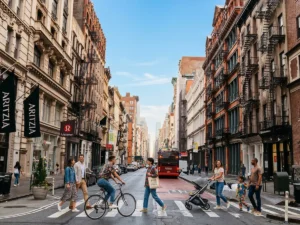
Often overshadowed by neighboring SoHo, NoHo is in fact home to some of the most expensive and coveted square footage in Manhattan today. It is smaller, more private, and far more residential. While SoHo is defined by commerce, NoHo is defined by forward-thinking residential architecture.
Architecture: A Dialogue Between Old and New
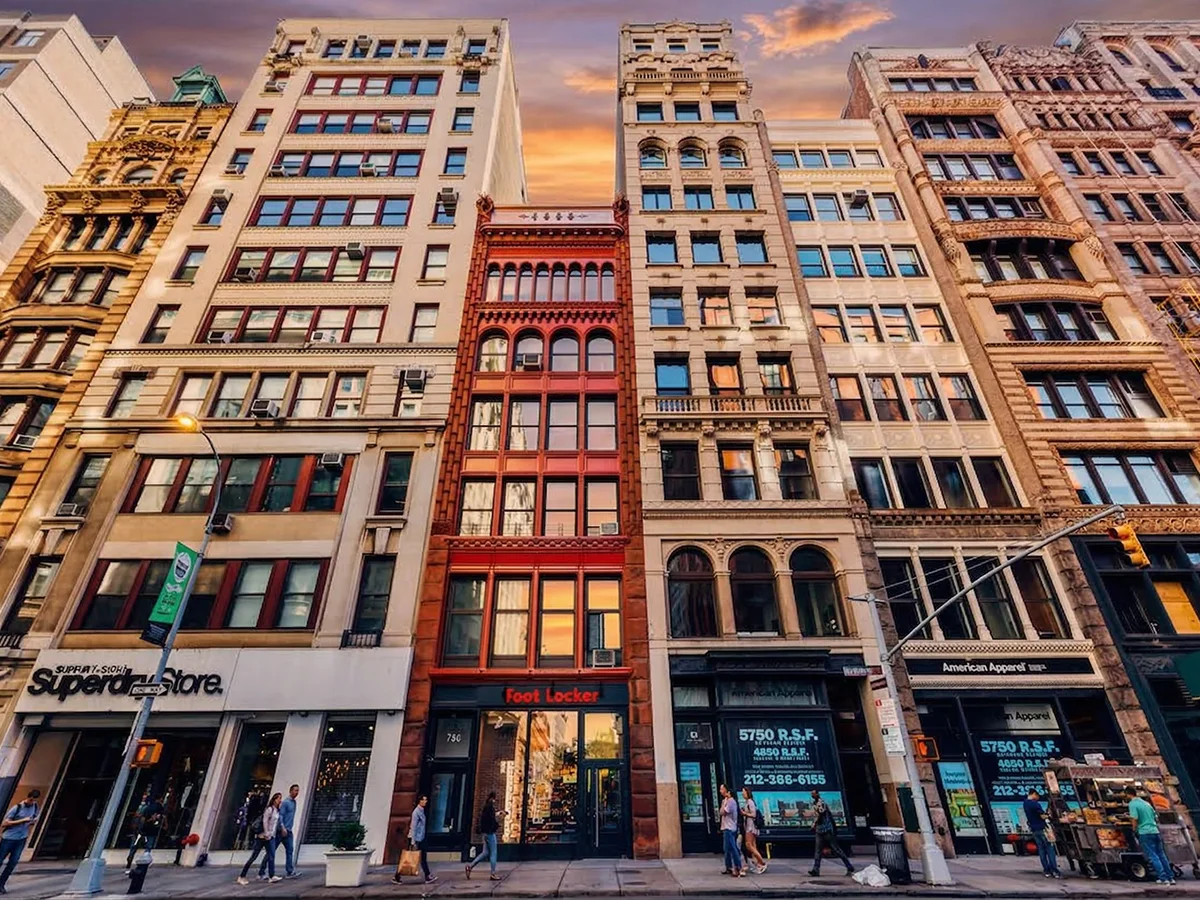
NoHo is a laboratory of architectural design. Streets such as Bond Street showcase what becomes possible when capital meets creativity.
- 40 Bond Street: Designed by Herzog & de Meuron, it is famous for its green glass façade and cast-aluminum graffiti gate. It redefined the idea of industrial luxury.
- The Schumacher: A conversion of a 1920 printing building into massive luxury lofts, blending vaulted brick ceilings with minimalist modern finishes.
Lifestyle: The Creative Elite
The typical NoHo resident is an insider, someone who knows the city intimately and prefers the quiet of Great Jones Street to the constant activity of Broadway. The neighborhood is home to some of the city’s best boutique fitness studios, elite yoga spaces, and restaurants such as Lafayette and Smile, places where people go to see and be seen, always within a code of discretion.
Why Invest in NoHo?
- Elite Micro-Location: You are steps away from the East Village, Greenwich Village, and SoHo, but with a much lower population density.
- Signature Architecture: Buildings in NoHo are often designed by starchitects, ensuring that each property is viewed as a work of art and retains long-term value.
Extreme Privacy: Because it is not a high-traffic tourist zone, residents can walk its streets with a sense of freedom rarely found in the Upper East Side or SoHo.